
DPDPA
Privacy as a Differentiator: How Insurers Can Win Customer Loyalty Under DPDPA
DPDPA is reshaping India’s insurance industry. Learn how insurers can turn data privacy into a differentiator that builds trust, loyalty, and growth.
Why Privacy Matters More Than Ever
In India’s fast-changing insurance market, data is at the core of everything insurers do. From underwriting life policies to settling complex health claims, companies rely on personal, financial, and medical details at every stage. With digital adoption accelerating, customers are sharing more information than ever before through mobile apps, online portals, and partner platforms.
The introduction of the Digital Personal Data Protection Act (DPDPA), 2023 makes it clear: insurers must take responsibility for how they handle this data. The Act transforms privacy into a legal and ethical imperative. But beyond compliance, insurers have an opportunity to make data privacy a competitive edge. Customers who feel their information is safe and respected are far more likely to remain loyal, buy additional products, and recommend the brand.
DPDPA: Raising the Bar for Insurers
The DPDPA is not business as usual. It fundamentally changes how personal data can be used across industries, and insurance is no exception. Insurers are now required to:
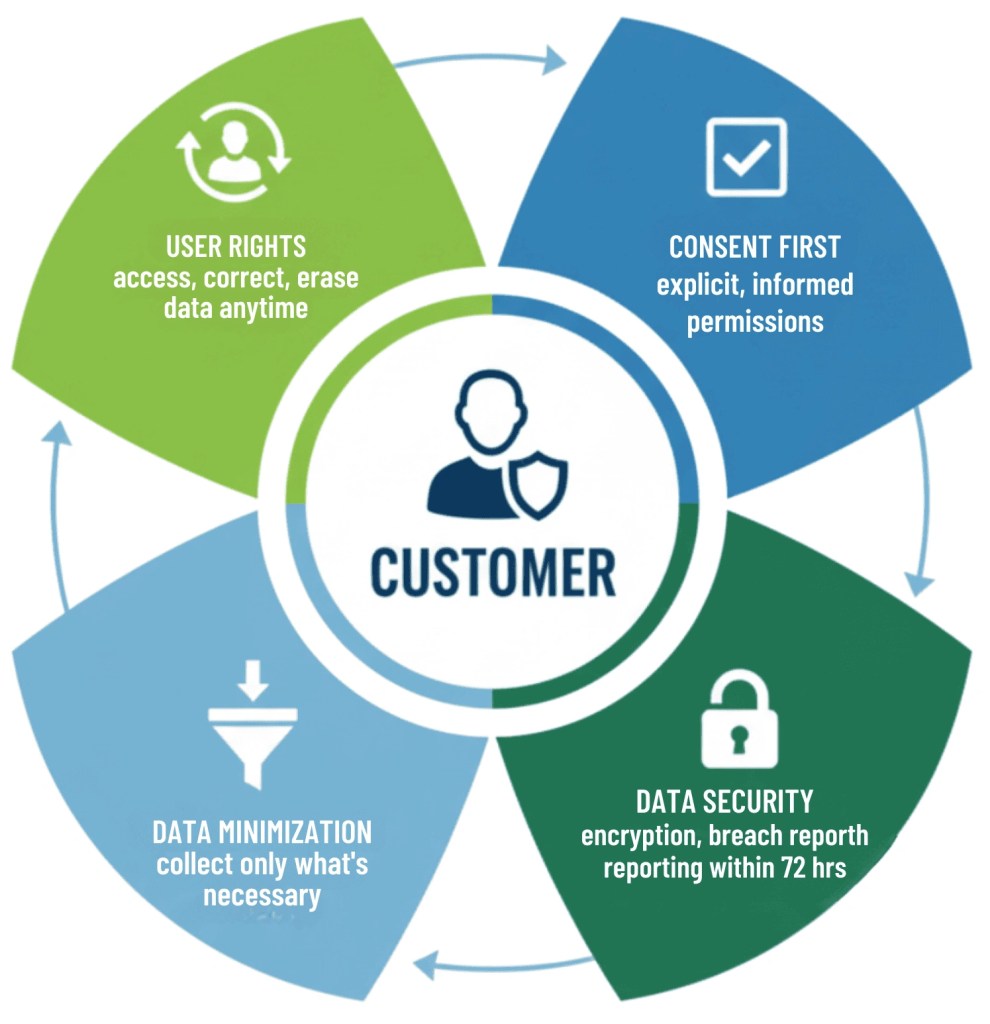
Obtain explicit and informed consent before processing customer data.
Collect only the data that is relevant and necessary for the stated purpose.
Give customers the right to access, correct, and erase their data.
Report breaches swiftly, with fines that can run into hundreds of crores for serious lapses.
For insurers, this means re-evaluating onboarding journeys, claims processes, marketing campaigns, and data-sharing agreements with third parties. The new law is demanding, but it also creates a chance to show leadership. Firms that comply rigorously – and communicate that commitment – can set themselves apart as trusted custodians of customer information.
Consent Management: The Foundation of Trust
Consent has always existed in insurance, but under DPDPA, it is elevated to the center of the relationship. Gone are the days of blanket consent buried in policy documents. Insurers must now seek granular, specific, and easy-to-understand permissions.
For example, a motor insurer might ask separately for permission to use telematics data for pricing, while also seeking approval for sharing that data with a third-party service provider. Customers should be able to grant one and decline the other. This level of transparency signals respect for their autonomy.
Just as important is making consent easy to manage. Customers must have simple ways to review what they have agreed to, withdraw permissions, or update preferences. Providing a digital dashboard or a dedicated portal for managing consents not only meets the law but also empowers customers, strengthening their trust in the insurer’s integrity.
Privacy by Design: More Than Just Compliance
Leading insurers are beginning to treat privacy as a design principle rather than a policy add-on. This approach, known as privacy by design, ensures that every new product, process, or digital channel has privacy embedded from the outset.
This includes:
- Collecting only the data needed for a given purpose (data minimization).
- Encrypting personal information both in storage and during transmission.
- Training staff at all levels to handle sensitive data responsibly.
- Extending privacy standards to partners like TPAs, brokers, and aggregators.
For insurers, the payoff is two-fold: lower risk of costly breaches and a stronger reputation for safeguarding customers. In a business built on risk management, protecting data becomes an extension of protecting lives, health, and assets. Customers increasingly see this alignment – and reward companies that take it seriously.
Communicating Privacy as a Value Proposition
Privacy only becomes a differentiator when customers can see and feel it. Insurers that proactively communicate their privacy practices gain an edge. This means moving beyond legal disclosures to human-centered communication.
Simple steps can have a big impact: explaining in plain language why data is collected, giving customers tips on protecting themselves from fraud, or sending regular updates about new security measures. Offering visible tools – such as privacy dashboards or quick links to update preferences – makes the insurer’s respect for customer choices tangible.
Even in times of crisis, communication is key. A transparent, timely response to a data incident can preserve, and sometimes even strengthen, trust. Customers value honesty and accountability far more than silence or vague assurances. Over time, insurers that actively demonstrate their commitment to privacy can turn compliance into a brand strength that attracts and retains loyal policyholders.
From Obligation to Opportunity
By embracing privacy as a core value, insurers can transform regulatory obligation into a differentiator in the market.
Trust has always been at the heart of insurance. In the digital era, that trust is inseparable from data privacy. Customers are becoming more aware of their rights and more selective about whom they share their information with. Insurers that rise to this challenge will not only meet the letter of the law but will win the confidence and loyalty of the modern policyholder.
Recent Posts
Related Posts

EV Insurance in India: Challenges, Trends & Opportunities

Cyber Insurance in India: Closing the Growing Protection Gap

Omnichannel Insurance Distribution in India

Insurer Insurtech Partnerships and the Future of Indian Insurance

From Protection to Prediction: How Analytics Is Reshaping Insurance